
Creative Goal-Setting: Put Your Ideas to Action
[The Creative Internship: Week 2] Saying yes to (and actually achieving) your big goals! Define what success means, map your research, and turn ideas into actionable steps.

Quick housekeeping: If this message didn’t land in your primary folder, move it there now so you never miss a post!

The Creative Internship is about playing, experimenting, and having fun—so you can discover what you love (without performing for an audience) and figure out what keeps you consistent before diving into full-time creativepreneurship. At the same time, it’s about being strategic during this season of trying out loud and failing forward.
I’m Isis — Harvard-certified business strategist, business owner (with my husband), and aspiring romance novelist. I recently sold my second book, and I’m currently loving life as a full-time writer! Here, on The Daily Yes, I help creatives put their big ideas into action, too! I teach through a Christ-led, anti-hustle, pro-ease lens. If you’d like to become our coworker, you can upgrade to a paid subscription with the link below!

This week’s focus is research and goal setting!
Maybe I’m a nerd, but goal setting and research were my favorite parts of my internship in college. Likely because my university was very student-led. During my internship, we were able to set our own goals — within reason — and choose research topics that actually interested us! Over time, my approach to reaching goals has become a bit more structured1, but I’ve distilled it into something actionable (and hopefully fun) for you!
Table of Contents
Note from Isis
Define What Success Looks Like for You
How to Research During the Internship
Shadow Me! (Isis’s Research Map)
How to Set Strategic Goals & Actionable Steps
Shadow Me! (Isis’s Goal Setting Table)
Homework for This Week
Closing Reminders

Last week, we defined our 10-week internship aspirations: what role we wanted and who we wanted to become at the end of the 10 weeks. I said that my internship would focus on my writing! But, my book is my baby! I want to protect my novel idea a little bit longer. Instead, you’ll get to shadow my other goal: building a writer brand and creating content that sparks curiosity and intellectual conversation.
The internship is still about PLAYING AROUND AND SEEING WHAT STICKS2!! I’m not expecting partnerships or sponsors anytime soon3—and I might not even stick to social media 🤣 But I’ve had a tumultuous relationship with social media, so I am curious to see if the “influencer” space feels freer than my past brand position as a marketing expert. If YouTube and TikTok4 are fun, great; if not, I won’t hesitate to step back. By the end, I want to answer: “What makes a successful creator and good influencer?”

take a moment to define what success, ‘good,’ and results mean to you. In my ideal influencer world, successful creators are honest and thrive from that honesty. If they teach business, they run a successful business. If they’re inspiring you to build your dream life, they’re actually living theirs. If they promote products, they clearly show why it makes sense for their brand. I’ll mostly study creators that are writers first and foremost.
How would you define success in your internship/industry/research topic?

I start every creative project with a research map, and this is what I want to share with you! A research map is exactly what it sounds like: a visual way to map out what you want to research over the next week. I love thinking of these like the fun elementary projects we used to do — answering: who, what, when, where, why, and how!

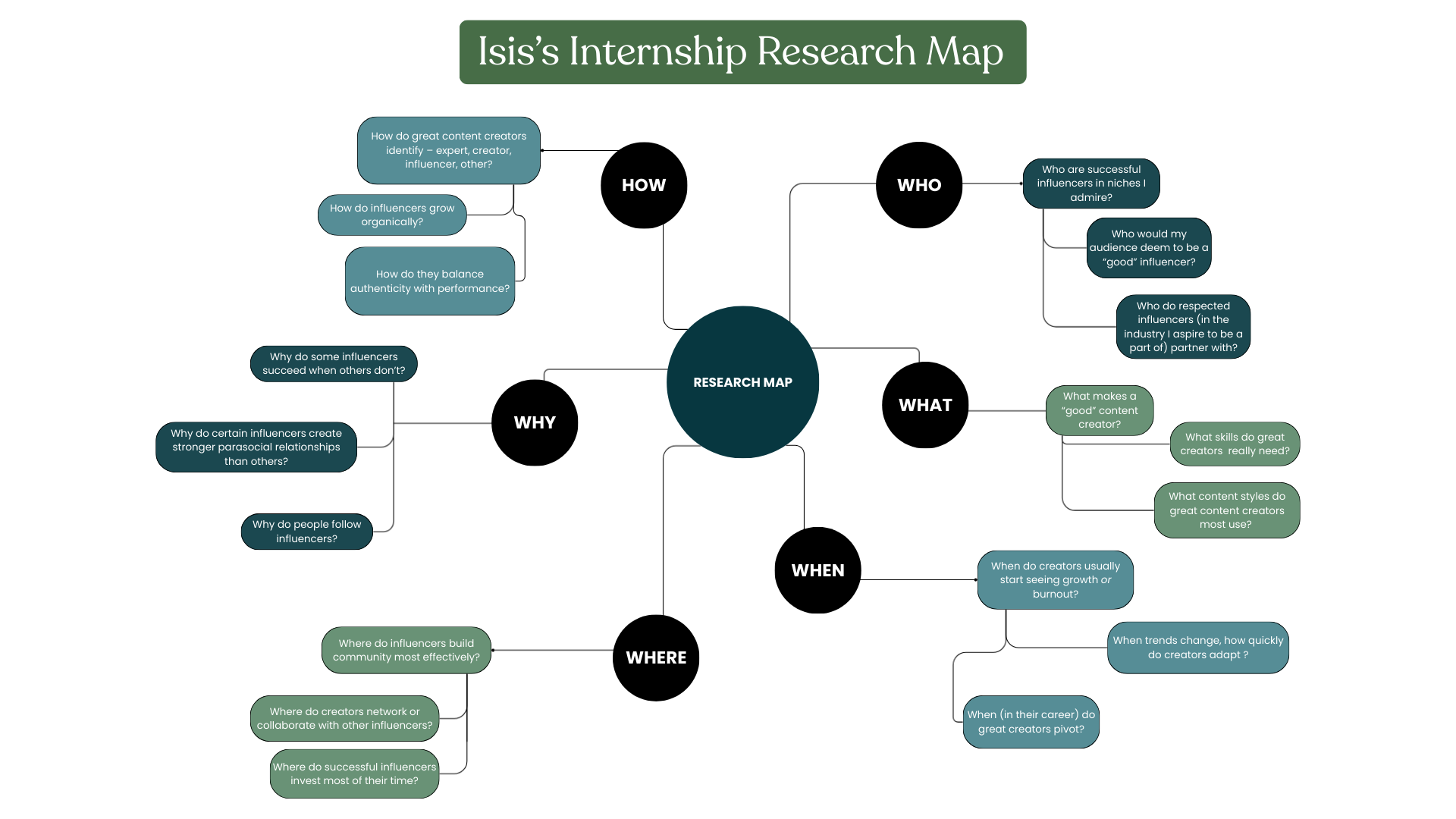
I use this map to guide my research, starting with simple, quick Google searches and seeing where they land. I like to add “pdf,” “gov,” “org,” “journal,” or “edu” to my Google searches so that they yield more reputable results. I also research on social media platforms like YouTube, and I’ll often add “lecture,” “interview,” or “seminar” to my search. One of my favorite, easy research tools is Google Scholar to find recent journals!
Other ways to complete research include:
Background reading – reference books, encyclopedias, nonfiction studies. Take it back to school days!
Industry reports – market research summaries and white papers from professional organizations.
Published case studies – detailed real-world examples or applications of your topic.
Field observation – observe behaviors, communities, or processes directly (my favorite!)
Online forums & communities – explore discussions on Reddit or niche forums (especially threads where people share sources!!)
The most important part of research is writing up what you learned. I like to type a tiny report to guide goal setting. For larger projects, I keep all research in a folder. You could also just bullet point what you’ve found.